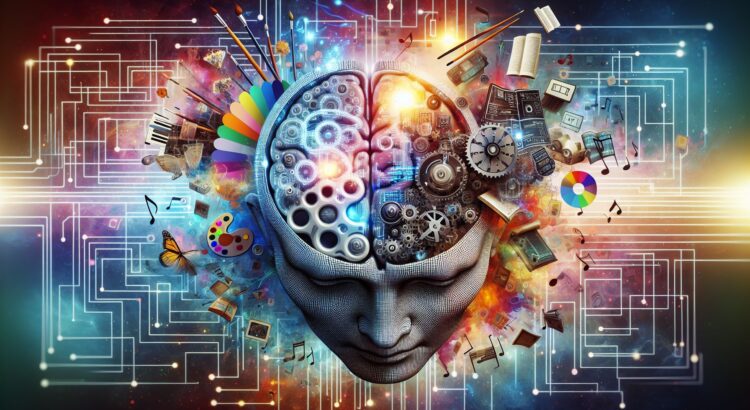
Hey there tech aficionados! Have you recently taken a moment to think about how far we’ve come with artificial intelligence? These days, AI isn’t just for number crunchers and data scientists. It’s making some seriously unexpected waves in areas we’d never have predicted just a few years back. Today, I want to chat with you all about what’s happening at the fascinating crossroads of AI and the creative arts. So, grab your favorite beverage, kick back, and let’s explore the future of artistic expression.
The AI & Art Renaissance
Ah, the arts—once the untouched dominion of human emotion and imagination. But hold onto your berets, folks, because AI is breaking into this domain with a swagger that’s simultaneously mind-blowing and slightly unnerving. Remember that scene in Ratatouille where Remy discovers flavor combinations he never thought possible? That’s AI entering our lofty world of creativity. But instead of blending herbs, it’s mixing pixels, sound waves, and plotlines.
AI art generators like DeepArt or OpenAI’s DALL-E have become the avant-garde artists of the digital age. They’re whipping up canvases that challenge traditional perspectives. In some instances, AI’s creations have sold at renowned art auctions for heaps—yes, heaps—of money. (Anyone got $432,500 handy?) While purists may cringe, art enthusiasts and techies like us find it’s a thrilling evolution. We are watching an artistic renaissance powered by algorithms. The artists? AI models trained on vast collections of human art from every era imaginable.
Music to Our Virtual Ears
Once upon a time, a generated beat might have been suitable only for elevator music. Sure, they had a certain robotic charm, but AI in music has evolved far beyond that. These days, you could find bots working alongside artists in top recording studios—no kidding!
AI music platforms such as Amper Music and AIVA are generating tracks that don’t just sound catchy; they’re moving and sophisticated. These programs analyze a staggering amount of music compositions to craft new, tailor-made soundtracks for anything from video games to indie films. Even masters like legendary composer Hans Zimmer have expressed awe at AI’s potential. Imagine a future where AI becomes the ultimate creative partner for composers, filling in the tedious gaps while artists focus on the intuitive strokes of genius. Mind-boggling, right?
The Literary Bots: AI Writing Companions
Now, picture this: a robot co-author who never takes control over the narrative thread but whispers fantastic character arcs and plot twists right in your ear. Yeah, it sounds straight outta Black Mirror, but it’s already happening with AI writing assistants like Sudowrite and Grammarly.
These digital companions are not about to replace authors (phew!) but are giving them superpowers: the ability to play with alternative styles, perspectives, and endless plot possibilities. AI is helping novelists get over writing blocks more effectively than a double-shot espresso. It’s an exciting time in literary history where AI doesn’t threaten to overshadow human genius but instead stands ready with an espresso shot for those moments when inspiration hits the skids.
Challenges and Complexity of AI Creating Art
While we’re riding this high tide of AI-generated creativity, we can’t ignore the flip side. As much as AI wows us with its artistic attempts, there are concerns. First off, there’s the question of originality. Can work composed by an AI truly be original or is it just a regurgitation of the data it has consumed? Artists spend lifetimes honing their craft; should an AI, with its knack for shortcuts, be celebrated as its own Picasso of pixels?
Moreover, we’re dealing with creativity and ethical concerns. How do we handle AI-contributed art with regards to intellectual property? Should a neural network get credit or its human partner? There’s a murky quagmire here that demands careful navigation because, much like Dr. Frankenstein, we need to know the responsibilities that come with our creation.
Peering Into the Future: AI’s Artistic Contribution
I’m inclined to think that AI, with its growing abilities, will keep pushing boundaries, expanding what we regard as art itself. If we’ve learned anything about technology, it’s that unpredictable innovation is par for the course. Ultimately, the most enticing part of AI in the creative arts is its relentless exploration in redefining our expectations, providing us platforms to better express raw human emotion and a canvas to experiment with.
The future of AI in creative arts echoes endless potential. AI may become the pencil and paintbrush, creating universes that challenge the canvas we’ve known. It’ll take some time to figure out where we go from here, but one thing’s for sure—our future looks creatively diverse and packed with potential that would give even Da Vinci something to marvel at.
That’s a wrap for today’s foray into the dizzying infinity of AI creativity. Are you excited, or maybe a tad apprehensive? Let’s dish it out in the comments. Till next time, keep those imaginations—and algorithms—buzzing!